 Shaykh Abu Asim Badrul Islam
A brief comparison of the two editions by Dār al-Minhāj (Jeddah) and a brief look at the new edition of Itḥāf al-Sādat al-Muttaqῑn bi Sharḥi Iḥyāʾ ʿUlūm al-Dῑn by Dār al-Nūr al-Mubīn (Amman)
إحياء علوم الدين
المقارنة بين طبعتي دار االمنهاج (جدّة) في 4 مجلدات و 10 مجلدات
تأليف: حجّة الإسلام الإمام أبي حامد محمد بن محمد بن محمد بن أحمد الغزالي الطوسي الطبراني الشافعي (450 -505)
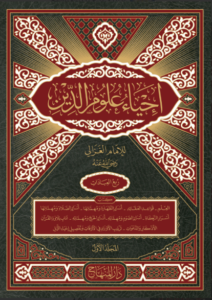
Image of the front cover (vol. 1 of the 4-volume edition).
Title: Iḥyāʾ ʿUlūm al-Dῑn
Author: Abu Ḥāmid Muḥammad ibn Muḥammad ibn Muḥammad al-Ghazālī (450-505 AH)
Editors: Research team at Dār al-Minhāj (Jeddah)
Genre: Classical Arabic literature/counsel/taṣawwuf/wisdom
Publisher: Dār al-Minhāj (Jeddah)
Year of publication: 1444/2023 (2nd edition, 2nd impression in 4 volumes)
Number of volumes: 4
Number of pages: 3,120
Imām Abu Ḥāmid Al-Ghazālī needs no introduction to any Muslim. Popularly known by the title of ‘Ḥujjat al-Islām’ (the proof of Islām), Imām al-Ghazālī is one of the most phenomenal scholars and ṣūfi masters in the history of Islām who, till this day, continue to amaze humanity with the depth of their knowledge, wisdom and spiritual light that emanate from their works. Author of tens of major works – mostly in Arabic, and some in his native Persian – Imām al-Ghazālī’s magnum opus is without doubt his monumental Iḥyāʾ ʿUlūm al-Dῑn (Revival of the Sciences of the Religion). It can be said without hesitation, the Iḥyāʾ is and shall always remain an unparalleled wonder of wonders, and it shall continue to astound academia of the East, as well as the West. The Iraqi-Indian master, Imām Sayyid Muḥammad Murtaḍā al-Zabῑdi’s (1145-1205/1732-1791) massive commentary on the Iḥyāʾ, titled Itḥāf al-Sādat al-Muttaqῑn bi Sharḥi Iḥyāʾ ʿUlūm al-Dῑn, has added another layer of astoundment to an already astounding masterpiece.[1]
This timeless monumental masterpiece has seen countless copies and publications since the time it was authored. In 2011 Dār al-Minhāj (Jeddah), to commemorate nine centuries since the passing of Imām al-Ghazālī, published the Iḥyāʾ ʿUlūm al-Dῑn in what is generally believed to be its best ever edition. In preparing this edition Dār al-Minhāj has expended an enormous amount of work and resources. They claim to have used 20 manuscripts (I think, this may include some old typewriter editions) and spent many years on the project. They have not included ʿAllāmah al-ʿIraqi’s referencing and scrutiny of the ḥadīths that occur in the book (المغني عن حمل الأسفار في الأسفار), which has historically been included in the footnotes of almost every edition of the book – instead, they have conducted their own referencing and scrutiny.
Dār al-Minhāj published their highly acclaimed edition initially in 10 volumes. This immediately became a best-seller. Several years later – possibly in response to popular demand or feedback – they published the book in 4 large and bulky volumes. Which of these two editions – 10 volumes Vs. 4 volumes – should a scholar or student purchase?
In terms of the aesthetics of the final product, their 10-volume edition is undoubtedly a very beautiful publication. However, I personally do not like how they have put so little text on each page. The font is large and much space has been wasted on every page due to the particular style of typesetting. This has inevitably caused the book to be amplified into 1+9 volumes (total 10). The first volume (512 pages) contains a brief biography of the author, a description of the work that was undertaken by the editorial team, details of the manuscripts used and some interesting and beneficial discussions on various aspects of the Iḥyāʾ ʿUlūm al-Dῑn – including objections that have historically been raised against the book and their responses – through the inclusion of two popular books.
In contrast to the 10-volume edition their 4-volume edition comprises 4 large and bulky volumes. They are also beautiful, but in a different way. They have used thinner paper for this edition and a lighter tone of ink (some of which is not consistent throughout the volumes in the one that came into my ownership). My advice to anyone contemplating buying the Dār al-Minhāj edition is:
See both editions (10-volume and 4-volume) physically, handle them and then decide which one you prefer. Whichever edition out of the two you settle on, the book is, of course, an absolutely mind-boggling, timeless phenomenal masterpiece – perhaps, until the Day of Judgement.
Note:
Apart from the above two separate editions by Dār al-Minhāj (Jeddah), there is also a recent edition in six volumes by Dār al-Fayḥā᾽ (Damascus). I have not been able to see this edition.

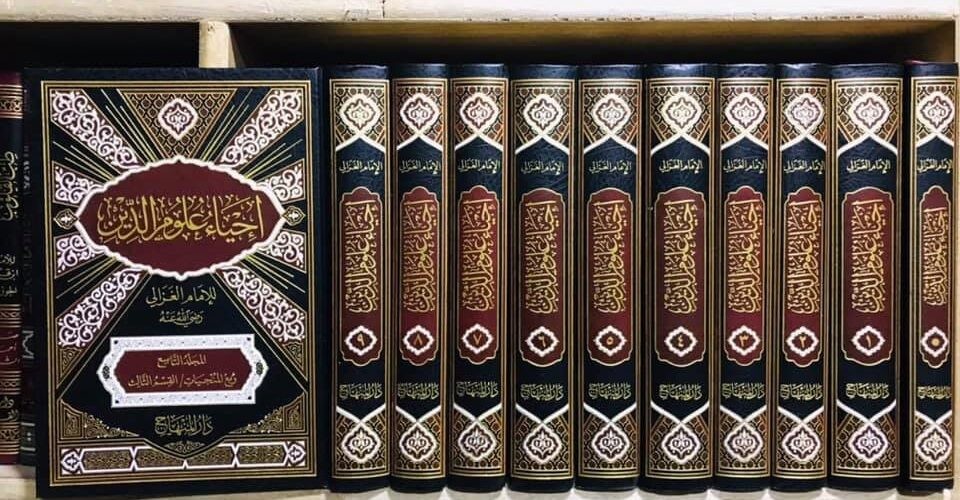
The 10-volume edition.
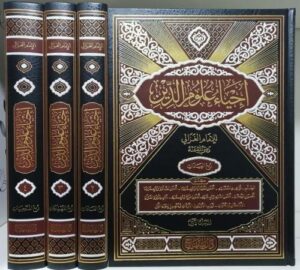
The 4-volume edition.
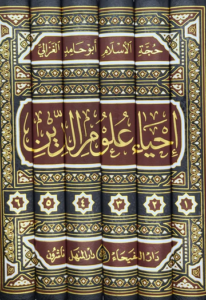
The 6-volume Dār al-Fayḥā᾽ (Damascus) edition.
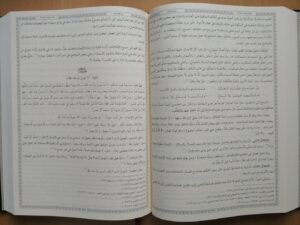
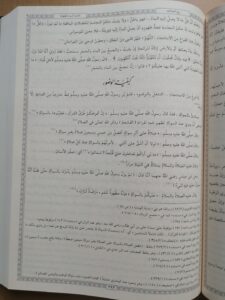
Sample page from the 4-volume Dār al-Minhāj edition (above) and the same section from the 10-volume edition (below).
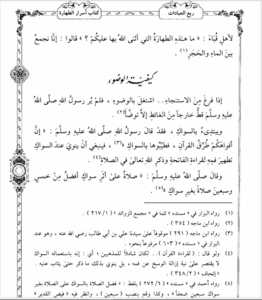
Sample page from the 4-volume Dār al-Minhāj edition (above) and the same section from the 10-volume edition (below).
إتحاف السادة المتقين ط. دار النور المبين
Title: Itḥāf al-Sādat al-Muttaqῑn bi Sharḥi Iḥyāʾ ʿUlūm al-Dῑn
Author: Imām Sayyid Muḥammad Murtaḍā al-Zabῑdi (رحمه الله تعالى)
Editors: Research team at Dār al-Nūr al-Mubīn (Amman)
Genre: Classical Arabic literature/counsel/taṣawwuf/wisdom
Publisher: Dār al-Nūr al-Mubīn (Amman)
Year of publication: 2024
Number of volumes: 30
Anyone short of space and/or money for the Dār al-Minhāj edition of the Iḥyāʾ ʿUlūm al-Dῑn is advised to consider purchasing just the Itḥāf al-Sādat al-Muttaqῑn bi Sharḥi Iḥyāʾ ʿUlūm al-Dῑn of Imām Sayyid Muḥammad Murtaḍā al-Zabῑdi (رحمه الله تعالى) that has been published in 30 volumes by Dār al-Nūr al-Mubīn (Amman) in 2024 (this is if Dār al-Minhāj no longer intends to publish its own edition of this monumental commentary). By making this purchase, one would have achieved two priceless treasures with one sacrifice – the Iḥyāʾ ʿUlūm al-Dῑn and its commentary, Itḥāf al-Sādat al-Muttaqῑn.
Written by one of the greatest shāfi῾i masters, the Iḥyāʾ ʿUlūm al-Dῑn contains a significant amount of shāfi῾i fiqh, which is often at odds with ḥanafi fiqh. Imām Sayyid Muḥammad Murtaḍā al-Zabῑdi – himself a great ḥanafi scholar – masterfully presents the ḥanafi stance in all such masā᾽il, and where there is a need to defend the ḥanafi school of law he does so satisfactorily. Wherever there is any ambiguity or complexity in the text of the Iḥyāʾ ʿUlūm al-Dῑn, he steps in with his splendid elucidation. His commentary is bursting to the brim with Prophetic ḥadīth, Qur᾽ānic tafsīr, jurisprudence, lexicon, history, biographical notes, anecdotes and observations, and much more. Besides this, Imām Sayyid Muḥammad Murtaḍā al-Zabῑdi has added tonnes of extra discussions and enquiries into a plethora of issues throughout his commentary, which are all as highly beneficial as they are captivating and interesting.
The editor who prepared the Dār al-Nūr al-Mubīn edition states that he has incorporated the text of the Iḥyāʾ ʿUlūm al-Dῑn directly from the Dār al-Minhāj edition.
Though a beautiful edition on which the editor states that he has spent eleven years, this new 30-volume edition is lacking in terms of research value, as the editor admits that he used just a single partial manuscript of the work, which was incomplete and defective in places. He claims that this manuscript is the original of the author, handwritten by Imām Sayyid Muḥammad Murtaḍā al-Zabῑdi in the Farisi script. He supported this partial manuscript with the Maymaniyyah (Cairo) typewriter edition of 1311 AH/1893 CE.
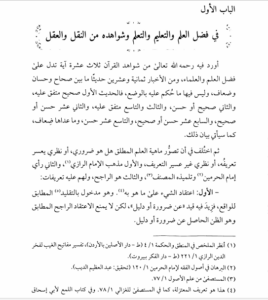
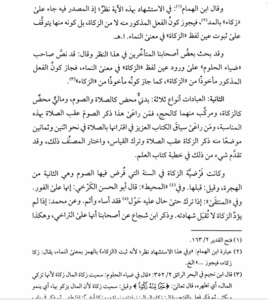
His edition is essentially no more than a fresh typesetting with highly beneficial modern Arabic punctuation marks and paragraphing. Admittedly, this does make the reading experience and overall engagement with the book significantly easier and much enjoyable compared to what it was in the past. In fact, it completely transforms the reading experience.
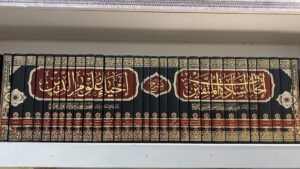
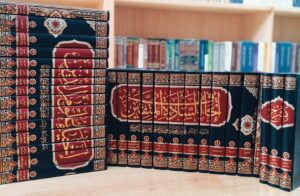
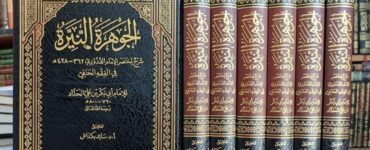
The new 30-volume edition of Itḥāf al-Sādat al-Muttaqῑn bi Sharḥi Iḥyāʾ ʿUlūm al-Dῑn.
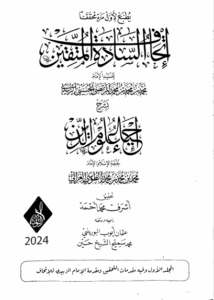
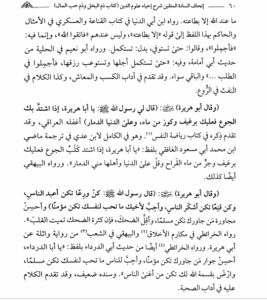
Sample pages of Itḥāf al-Sādat al-Muttaqῑn bi Sharḥi Iḥyāʾ ʿUlūm al-Dῑn (above and below).
Abu Asim Badrul Islam
Northampton
ENGLAND
07 Sha῾bān 1447/27 January 2026
[1] For a fascinating window into the life and world of Imām Sayyid Muḥammad Murtaḍā al-Zabῑdi, see: Stefan Reichmuth, Murtadā az-Zabīdī (D. 1791) in Biographical and Autobiographical Accounts. Glimpses of Islamic Scholarship in the 18th Century in Die Welt des Islams, New Series, Vol. 39, Issue 1 (Mar., 1999), pp. 64-102.


 SiblingsOfIlm Guest Contribution