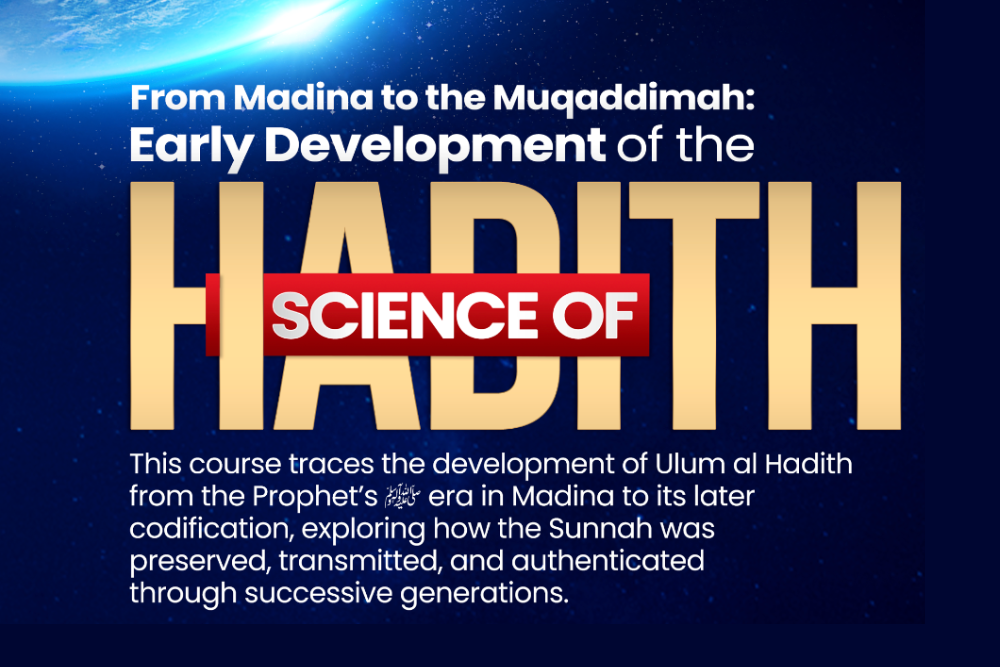
This three‑session course traces the early evolution of ʿUlūm al‑Ḥadīth from its origins in Madina during the Prophet’s ﷺ lifetime to its structured articulation by the early scholars of Islam. Students will explore how the Sunnah was preserved, transmitted, and authenticated, and how legal principles (uṣūl) organically developed from the lived practice of the Prophet ﷺ, the interpretive methods of the Companions, and the scholarly efforts of the Tābiʿīn and early Imams.
Across the sessions, the course examines:
- How the earliest Muslim community understood, practiced, and transmitted the Sunnah.
- The gradual shift from oral preservation to written documentation.
- The emergence of methodological principles that later became formal Uṣūl al‑Hadith.
- The pioneering figures—such as Imām al‑Shāfiʿī, Ibn Ḥibban, Allamah Ramahurmuzi and early Hadith critics—who shaped the foundational frameworks.
- The earliest works, proto‑manuals, and methodological treatises that laid the groundwork for later codifications, culminating in lengthy structured works like Muqaddimah Ibn al‑Ṣalāḥ.
There will be no recordings available for the live sessions, students must attend live.
Students will have access to a course forum containing resources and materials provided by the teacher.